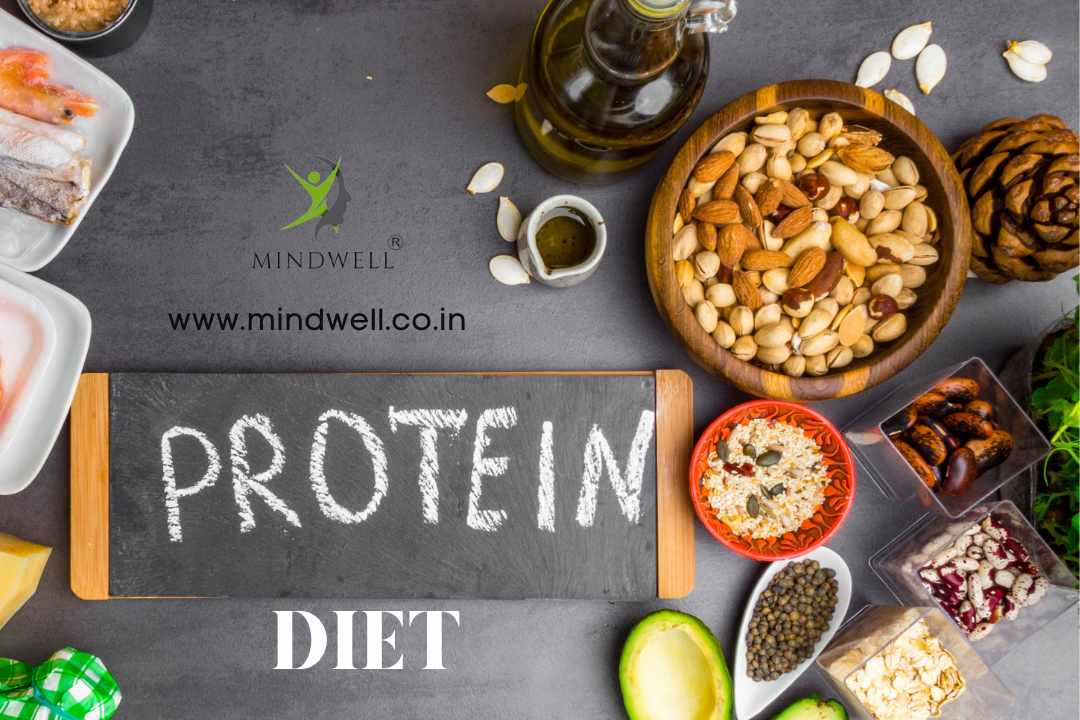
Protein is found throughout the body in muscle, bone, skin ,hair, nails and every other body part and tissue. It is made up from 20 plus building blocks called amino acids. Our body makes them in two different ways either from scratch or by modifying others.
The 9 essential amino acids histidine, isoleucine, leucine, lysine, methionine, phenylalanine, tryptophan, valine and threonine must come from food.
Dietary proteins are involved in the synthesis of tissue protein and other special metabolic functions. In anabolic processes they furnish the amino acids required to build and maintain body tissues. As an energy source, proteins are equivalent to carbohydrates in providing 4 kcal/g. However, they are considerably more expensive, both in cost and in the amount of energy required for metabolism.
Proteins perform a major structure role not only in all body tissues but also in the formation of enzymes, hormones and various fluids and body secretions.
As antibodies, they are involved in the function of the immune system.
Proteins also contribute to homeostasis by maintaining normal osmotic relations among body fluids. Albumin is particularly important to this function. Because of their unique structure, proteins are able to combine with either acidic or basic substances, thus maintaining the acid-base balance of blood and tissues.
1) Growth and Maintenance of tissue : Much of the new protein synthesized by cells is used for the maintenance of the structure of the cells, in other words for the continual replacement of the existing proteins, this is required because proteins are continually degraded and then resynthesized in a process known as protein turnover. The constant breaking down and resynthesis of protein causes about 0.3% to 0.4% of bodily protein to be turned over every day.
The turnover of the wall of the intestine alone, which is replaced every 4 to 6 days, requires the synthesis of about 70g of protein per day. Fortunately, the body is efficient at conserving protein and it reuses most of the amino acids released by the breakdown of proteins for the synthesis of new proteins to replace them. One way in which protein is lost from the body is within the skin, hair and nails which are constantly shed from the body’s surface.
Protein is also lost in the small proportion of the continuously shed intestinal wall cells that are excreted.
New growth, including the build-up of muscles can occur only when an appropriate mixture of amino acids is available over and above the amount needed for the maintenance and repair of existing tissue.
The vital process of cell division is also dependent on proteins.
The structural matrix or framework giving bones and teeth their strength and rigidity. Collagen is also the main protein within tendons and ligaments, and it is the intercellular material that binds cells together.
2) Formation of Essential Body Compounds :
Many of the hormones (such as insulin, gastrin and growth hormone) produced by various glands in the body are proteins or peptides. The oxygen molecules needed to oxidize food molecules during respiration are transported through the blood by the protein haemoglobin, which gives blood its red colour. Almost all of the many substances responsible for the clotting of blood are proteins.
The photoreceptors in the eye, which initiate the nervous signals responsible for the sense of vision when they absorb light, are proteins.
Epinephrine (adrenaline), a hormone secreted by the adrenal gland, is derived from the amino acid tryptophan serves as the precursor for the vitamin niacin and also for serotonin a vital neurotransmitter that is involved in transmitting nerve signals from one nerve cell to another.
If the diet is deficient in protein, the synthesis of the most vital of these body compounds seems to take priority over the synthesis of less important proteins such as those in skin and hair. Thus, a deterioration in the condition of skin and hair is one of the earliest signs of protein deficiency.
3) Maintenance of Appropriate pH :
Proteins in the blood serve as buffers, which are compounds that resist changes in pH values and therefore tend to maintain pH values, even if small amounts of acids or alkalis are added to them.
The buffering action of proteins in the blood ensures that there is normally no significant change in the pH value of blood despite the continual transport of many different substances including both alkalis and bases through blood.
4) Transport of Nutrients :
Proteins play an essential role in the transport of nutrients from the intestine across the intestinal wall to the blood, from the blood to the tissues of the body and across the membranes of the tissues of the body and across the membranes of the cells of the tissues.
If a deficiency of such transport and membrane-bound carrier proteins occurs because of a general lack of protein in the diet, the absorption or transport of some vital nutrients is reduced, which may make the original deficiency worse
5) Regulation of water balance :
Fluid in the body is distributed between two types of compartments: the intracellular compartment (within each cell) and the extracellular compartment (outside of each cell). The extracellular compartment is itself divided into the intercellular (between the cells) and the intravascular (within the blood vessels) compartments. These compartments are separated from one another by cell membranes, and the distribution of fluid between them must be kept in balance. This balance is achieved by a complex network of control systems involving both dissolved proteins and dissolved ions (electrolytes), primarily sodium (Na+) and potassium (K+) ions.
Protein molecules in the blood that are too large to pass out of the blood into the intercellular space exert an oncotic pressure, drawing water from the intercellular space back into the blood. This is essentially just a form of osmosis in which water diffuses into the blood because of the higher concentration of proteins (and other large molecules) within the blood. A hydrostatic pressure pushing fluid in the opposite direction out of the blood and into the intercellular space is also always present because of the pumping action of the heart. The net direction of fluid flow depends on the relative values of these opposing pressures. When the level of protein in the blood is low, the hydrostatic pressure dominates and pushes fluid out of the blood. This causes an accumulation of fluid within the tissues, making them soft and spongy with a bloated appearance. This condition, known as edema, is recognized as an early sign of protein deficiency, although it can also be caused by several other factors.
6) Defense and Detoxification :
The body’s ability to fight off infection depends on its immune system, most noticeably the ability of the immune system to produce a diverse array of defensive proteins known as antibodies.
Each antibody is able to bind to specific parts of infectious organisms or other foreign chemicals known collectively as antigens. Once bound to an antigen, an antibody assists in the elimination of the antigen in a variety of ways. Because a specific antibody is required for each specific antigen, the body can produce an astonishing diversity of antibodies, which requires a considerable amount of protein synthesis.
This means that a healthy immune system depends on a good supply of the amino acids needed to synthesize new antibodies.
Malnourished young children, particularly in developing countries are known to have a lowered resistance to infection which leaves them unable to fight off many infections. This lowered resistance to infection is attributed to an inability to produce adequate supplies of antibodies and other defensive proteins, which can in turn be attributed to a protein deficiency in their diets.
The health of the body is also threatened by various toxic compounds that are found within foods and in the environment at large.
These toxins are normally detoxified by enzymes found mainly in the liver which convert them into harmless substances.
If protein synthesis is restricted because of a nutritional deficiency, the ability of the body to detoxify harmful chemicals can be significantly reduced. This also makes a person with a protein deficiency more susceptible to the effects of poisons or drugs.
So, a protein diet is very necessary. Add proteins in your diet every day.
We provide nutrition consultation in our Mindwell Clinic as per individual needs. A personal individual diet is suggested as per the requirement. To get your personal consultation contact