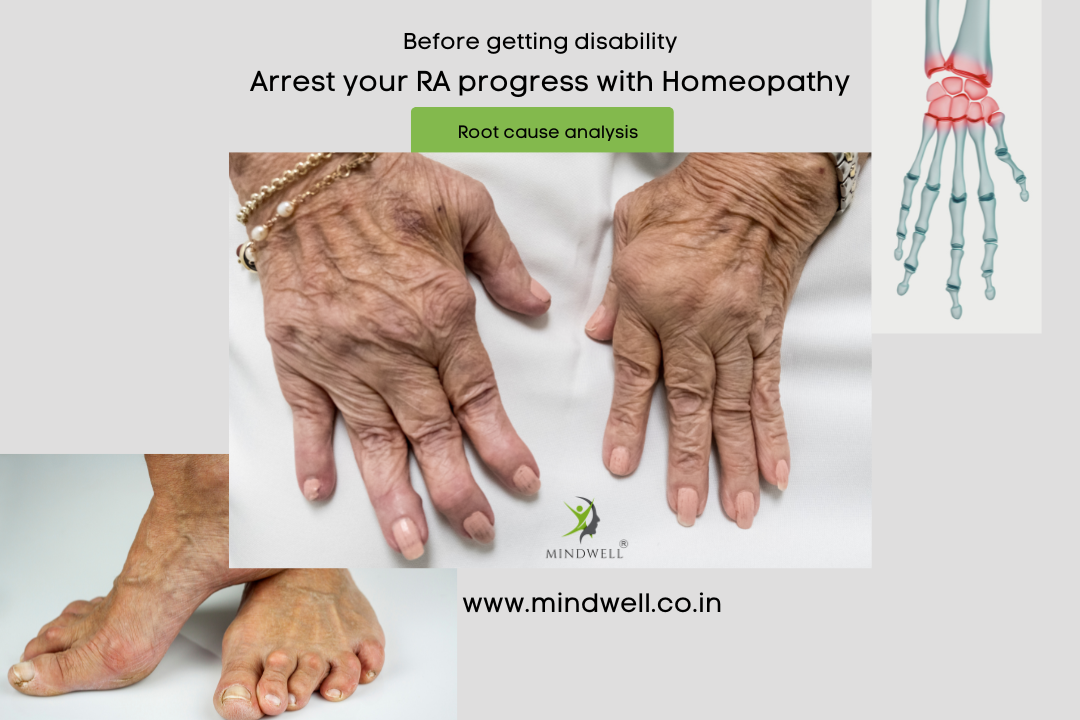
Rheumatoid arthritis (RA) is the most common type of autoimmune arthritis. RA causes pain and swelling in the wrist and small joints of the hand and feet but can also impact the shoulders and knees.
Treatments for RA can minimize joint pain and swelling and prevent joint damage and deformities Early treatment will give better long-term results and reduce need for joint replacement.
If in mild grade then homeopathy is best & if severity is increases then conventional treatment and homeopathy goes hand in hand.
Regular low-impact exercises, such as walking, and exercises can increase muscle strength. This will improve your overall health and lower pressure on your joints.
Rheumatoid arthritis (RA) is a chronic autoimmune disease that causes inflammation in the joints and surrounding tissue. The following are common symptoms of RA:
- Pain, swelling, and stiffness in the joints, especially in the hands, wrists, and feet
- Fatigue and a general feeling of being unwell
- Loss of joint function and mobility
- Warmth and redness over affected joints
- Small lumps under the skin near affected joints (rheumatoid nodules)
- Weakness and muscle wasting
- Dryness and irritation in the eyes and mouth
- Reduced appetite and weight loss
It is important to note that symptoms of RA can vary from person to person and may be different from one episode to another. Some people may experience sudden, severe symptoms, while others may have more gradual onset.
Treatment options in rheumatoid arthritis
Treatment for rheumatoid arthritis (RA) is focused on reducing symptoms, slowing disease progression, and improving overall quality of life. The goal of treatment is to achieve low disease activity or remission. Here are some of the treatment options for rheumatoid arthritis:
Medications:
- Conventional:
- Nonsteroidal anti-inflammatory drugs (NSAIDs)
- Disease-modifying antirheumatic drugs (DMARDs)
- Biologic response modifiers
- Corticosteroid
2. Physical therapy and exercise:
- Gentle exercises like yoga and tai chi
- Strengthening exercises to maintain joint stability
- Range-of-motion exercises to maintain flexibility
3. Assistive devices:
- Canes, walkers, and orthotics
- Modifications to the home and workplace
Complementary and alternative therapies:
- Alternative Therapy:
- Homeopathy
- Acupuncture
- Massage therapy
- Herbal supplements
2. Lifestyle changes:
- Maintaining a healthy diet
- Avoiding activities that put stress on joints
- Getting enough sleep
Treatment plans for RA are individualized and based on factors such as the severity of symptoms, the stage of the disease, and overall health. It is important to work closely with your healthcare provider to determine the best course of treatment for your specific needs.
If in mild grade then homeopathy is best & if severity is increases then conventional treatment and homeopathy goes hand in hand. Symptoms always differ from case to case. Homeopathy covers an individual approach in each case and helps to reduce progress of disease with reduction in pain and is safe to take long term.
To book an appointment for Expert consultation with us visit www.mindwell.co.in
+ 91 9819901406/ + 91 9819904411